1939 – Suddenly there is war
Semptember 1, 1939
German invasion of Poland (beginning of World War II)
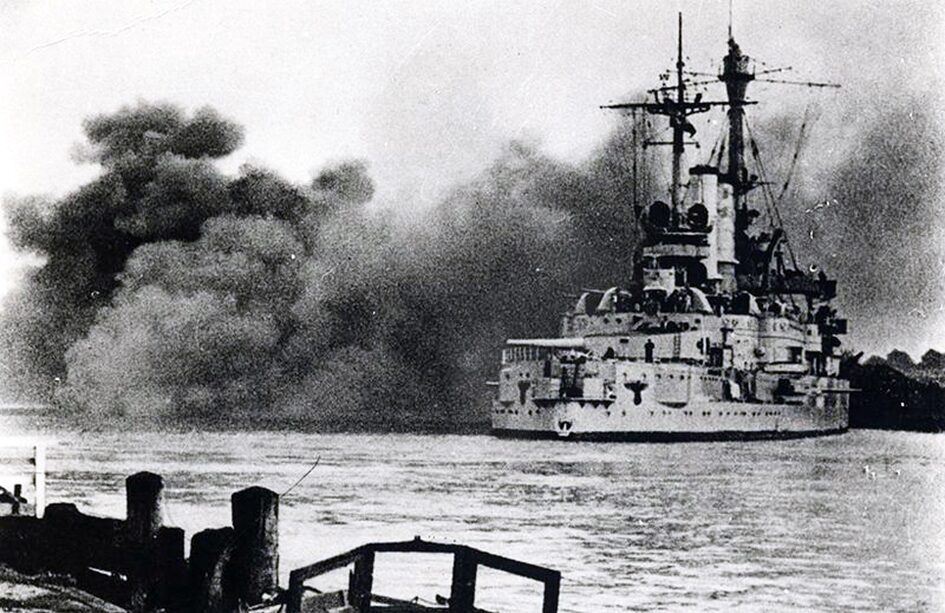
Germany’s invasion of Poland on 1 September 1939 marks the beginning of the Second World War. Hitler’s aggressive expansionist policy plunges Europe into a destructive war – and suddenly, life at home is turned upside down.
Hilde Nordhoff from Oberfrohna has just returned from visiting her fiancé. Everyday life feels strange: there is tension everywhere, and everything familiar seems lost. Ro-land writes from Schmilka:
‘They were abruptly and harshly interrupted by the turbulent events of this week, and there is no respite or afterglow.’
He senses how the peaceful surroundings he sees from his window are in flames – not far away, but at an end that ‘affects and touches’ them both.
Hilde also feels great fear that happiness could be nothing more than a fragile illusion. She later writes:
‘You have given me such great joy today with your lovely letter! … I can be so strong for you.’
This joy is at the same time marked by concern – for Roland, for the future, for what is to come.
The situation in Oberfrohna is becoming noticeably worse. More and more men are being called up, and many are not returning or are far away. People are unsettled, the community is disintegrating: the number of familiar everyday relationships is dwindling – ‘there are fewer and fewer of our men’. The unrest among the people is growing daily.
Economically and socially, the war is not just a distant front – it is becoming an immediate burden. Production is stagnating, employment is fluctuating, refugees are arriving. Working hours are shrinking, food is becoming scarce. Economic cutbacks and restrictions are omnipresent.
Despite everything, Hilde tries to show strength. She does not want to cause additional worries, but rather offer comfort and hope. She writes:
“So that you, my dear, may be completely free of worry, I want to give you a sign today.” She hopes for a speedy reunion, holds on to love, keeps the small lights of hope shining, even when darkness is already close. So war does not begin only where bombs fall and soldiers fight – it begins in letters, in hearts, in worry and in waiting. It changes life from one day to the next, even in Oberfrohna.
September 3, 1939
Declaration of war on France and Great Britain on Germany
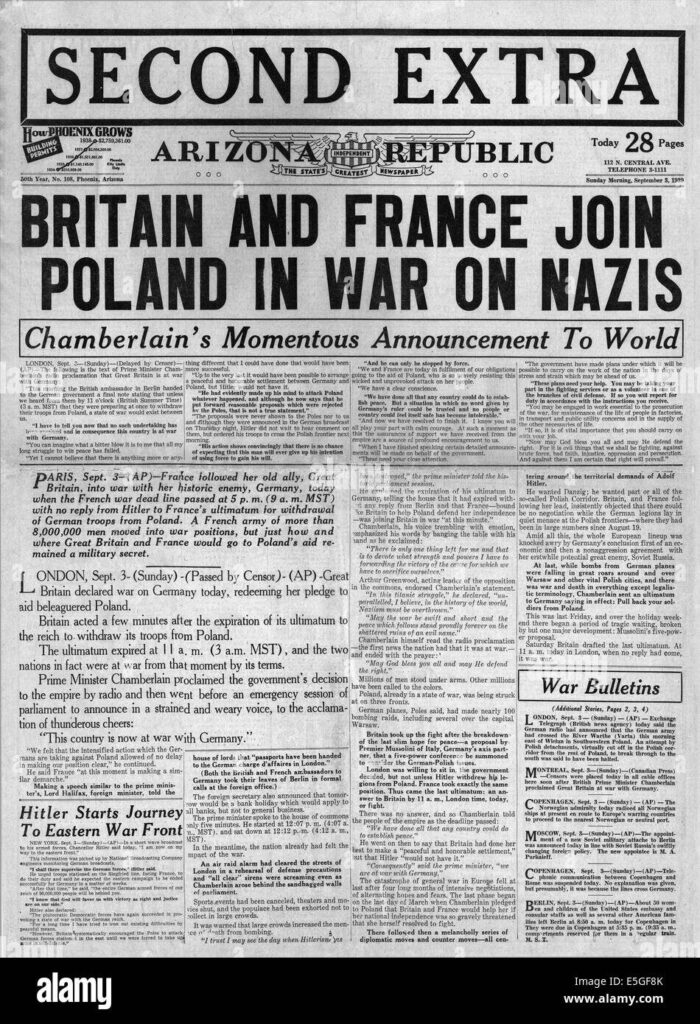
On September 3, 1939, Great Britain and France declared war on Germany after the German invasion of Poland. This was a decisive moment that marked the beginning of a global conflict. In London, British Prime Minister Neville Chamberlain announced on the radio:
“I have to tell you now that no such undertaking has been received, and that consequently this country is at war with Germany.”
France followed with a similar declaration later that day. While these political decisions were broadcast to the world, the people in Germany experienced this day with anxiety and uncertainty, as reflected deeply in the personal letters of Hilde and Roland Nordhoff.
Hilde Nordhoff, writing on September 4, 1939, conveyed her heavy emotional state in a letter to her fiancé Roland:
“Ach, man kann doch jetzt garnicht mehr so recht froh sein, dieser Zustand bedrückt alle. Liebster! Du willst Dich freiwillig zum Wachkommando melden. Ja, ich kann Dich recht gut verstehen, daß Du so untätig das Leben nicht erträgst. Und wo kann man sich besser nützlich machen, mehr geben, als wenn man sich in den Dienst des Vaterlandes stellt — gleichwo an welchem Ort.”
“I hardly can be happy anymore; this condition weighs heavily on everyone. Dearest! You want to volunteer for the guard duty. Yes, I understand very well that you cannot bear life being so inactive. And where can one be more useful, give more, than when serving the Fatherland — no matter at which place.”
She also described the rising anxiety among the people:
“Die Unruhe unter den Leuten wächst täglich mehr. Viele, viele sind schon fort. Unserer Männer werden es immer weniger — das ist so bedrückend, keiner weiß, wohin er gestellt wird.”
“The unrest among the people grows daily. Many, many are already gone. Our men are becoming fewer and fewer — it is so depressing, no one knows where they will be assigned.”
From Roland’s perspective, though from a later letter in December 1939, his emotional struggle is evident:
“Gestern abend überfiel mich ganz plötzlich eine Müdigkeit. Binnen wenigen Minuten muß ich fest eingeschlafen sein, ich habe es gar nicht gemerkt. ¼ 4 Uhr morgens erwachte ich, aus seltsamen Träumen. Zuletzt war Verlobungsfeier oder Hochzeit, in einer alten Kirche, 2 Pfarrer waren da, Onkel Erich war der eine, viele Verwandte sah ich.”
“Last night, sudden fatigue overtook me. Within minutes, I must have fallen deeply asleep; I did not even notice it. At quarter past three in the morning, I awoke from strange dreams. The last was an engagement celebration or wedding in an old church, with two priests present, Uncle Erich was one of them, I saw many relatives.” These certified translations are literal and faithful to the original texts and include the accuracy and completeness necessary for legal use. Hilde and Roland’s letters provide a powerful, human perspective on the moment Britain and France declared war on Germany, highlighting personal fears, responsibilities, and hopes amid historic upheaval.