1940 – Life under occupation
9th April
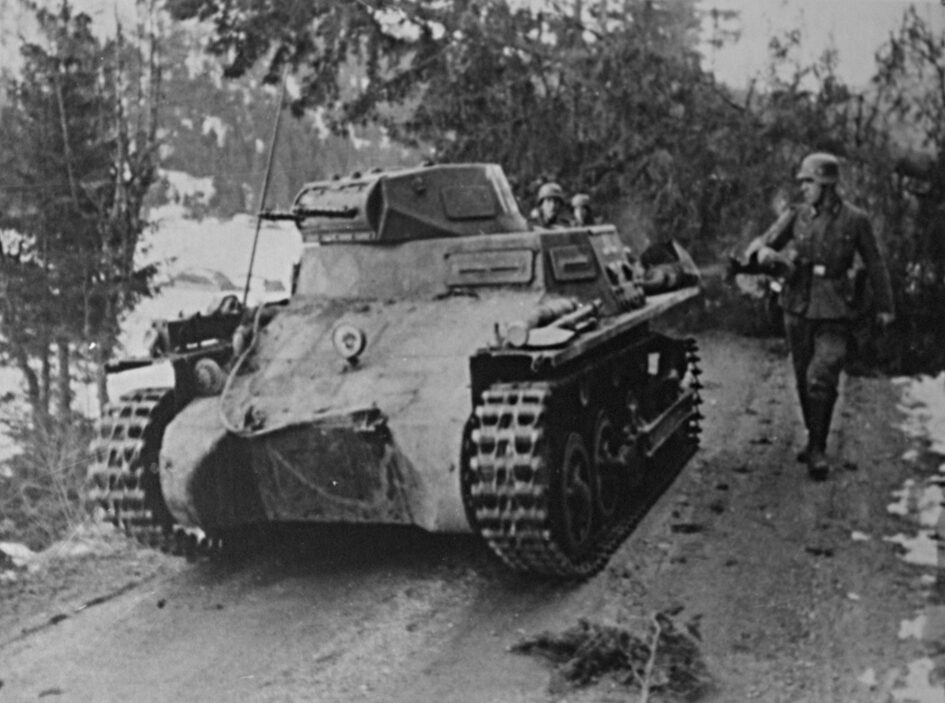
German attack on Denmark and Norway
On April 9, 1940, Germany launched Operation Weserübung, its surprise attack on the neutral states of Denmark and Norway. Early that morning, German troops crossed the Danish border while warships and paratroopers seized coastal cities and air bases across Norway.
The Nazi leadership justified the operation as a “defensive measure against a British landing,” but its true aim was to secure Norway’s harbors, airfields, and the vital Swedish iron ore supply that fed the German war industry. Denmark capitulated within hours, while in Norway, fierce fighting broke out around Oslo, Trondheim, and Narvik.
In Germany, people listened anxiously to the radio. In a letter dated April 10, 1940, Hilde Nordhoff wrote:
[translate]”This main event has displaced everything else. We hear news all day and hardly dare feel glad. A strange feeling hangs over everything — not quite joy, yet not worry either.”[/translate]
A few days later, Roland Nordhoff replied from his military post:
[translate]”I’ve now received a hundred letters from you, my dearest. Each one is a piece of home. Everything feels so heavy and serious today. I think of those who are now in the North. It’s as if the war has come closer to us.”[/translate]
Through their letters, Hilde and Roland captured the emotional landscape of April 1940 — a mixture of pride, fear, and quiet resignation. For them, the invasion was not a distant political triumph, but a chilling reminder that the war was entering a new, more immediate phase.
10th May
Geman attack on France, Belgium, Netherlands and Luxembourg
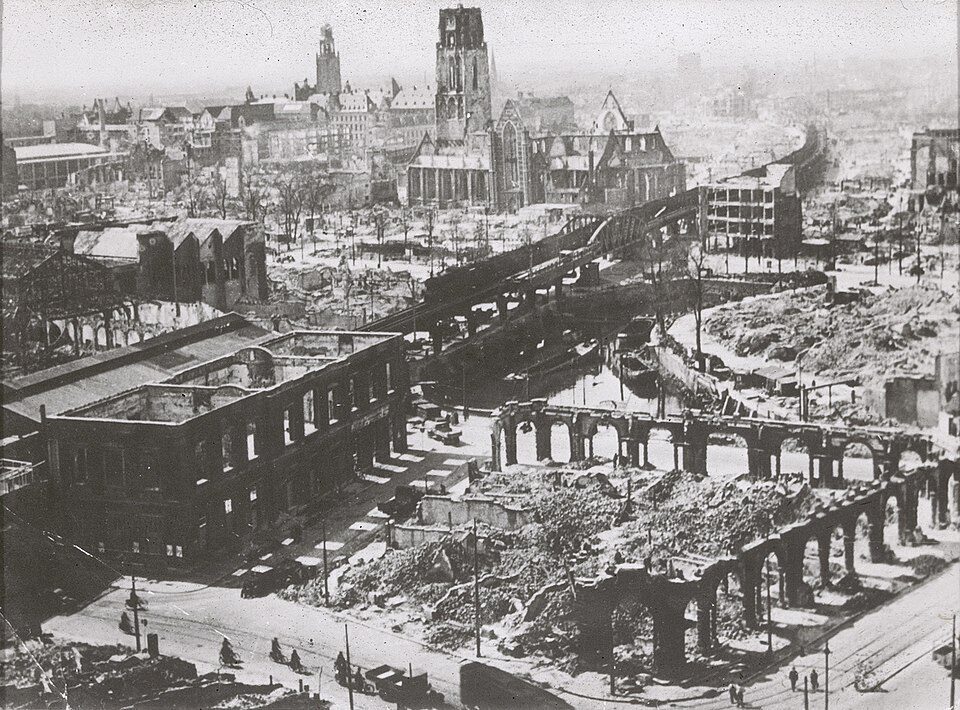
On May 10, 1940, the German military launched Case Yellow (Fall Gelb), an offensive against France, Belgium, the Netherlands, and Luxembourg. In the early morning hours, German troops crossed the borders. At the same time, paratroopers landed in the Netherlands and Belgium to seize strategic bridges and forts such as Fort Eben-Emael.
The goal was to overrun the neutral states, split French and British forces, and quickly win the war in the West. The breakthrough in the Ardennes near Sedan, led by tank generals Guderian and Rommel, was decisive. This marked the start of the offensive known as the “Blitzkrieg in the West”.
For many Germans, the attack came as a surprise. In a letter dated May 12, 1940, Hilde Nordhoff wrote:
[translate]”Everyone is talking about the swift advance, and yet no one can truly rejoice. I see mothers waiting anxiously for news and think of you. It feels like the heart is holding its breath.”[/translate]
Two days later, Roland Nordhoff replied:
[translate]”They say we have broken through at Sedan. Everything is happening so fast it’s hard to catch your breath. Yet amidst all the movement, I only think of whether you are sleeping well and are healthy.”[/translate]
The 10th of May 1940 marked the end of the so-called “Phoney War”. Within weeks, Western Europe had fallen, Paris was threatened, and the war once again changed the lives of people both on the front and at home.
22th Juny
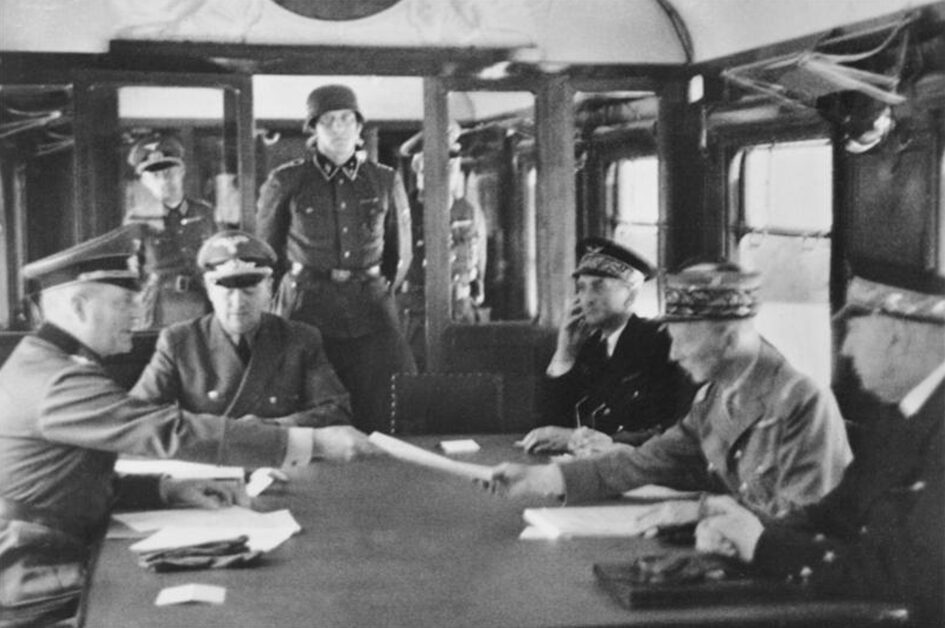
France Capitulates: Division and the Vichy Regime
On June 22, 1940, the armistice between Germany and France was signed in the forest of Compiègne, sealing France’s defeat in the Westfeldzug. The German Wehrmacht occupied about 60 percent of France, including Paris, important industrial regions in the north, and the Atlantic coast.
The remaining southern part of France stayed unoccupied, governed by the authoritarian Vichy regime led by Marshal Pétain, which cooperated closely with Germany. The Vichy government protested the German annexation of Alsace and Lorraine, but these were fully incorporated into the Reich.
This armistice ended full French sovereignty and marked years of occupation and collaboration.
Hilde Nordhoff wrote in this somber time:
[translate]”People everywhere speak of the enemy’s victory and yet also of hope. It is a strange peace hanging in the air — not calm, but more like the silence before a storm.”[/translate]
Roland, witnessing military events, wrote:
[translate]”The signs are clear: France is broken, and we stand at a turning point. The weight of this silence is only now felt. I fear the consequences — not for us, but for those now living under foreign rule.”[/translate]
The day marked a dramatic turning point for Europe. France was thrust into a new reality of occupation, division, and a regime balancing cooperation and oppression.