1941 – The war becomes borderless
April

Attack on Yugoslavia
The attack on Yugoslavia began on April 6, 1941, with air raids by the German Wehrmacht on Belgrade.
In the letters of Roland and Hilde, the perception of these events from the German point of view is reflected.
At this time, Roland was stationed in Bulgaria (Plovdiv) and reported on the ongoing fighting and the expectation of a quick victory.
Hilde, who followed the situation from Germany, wrote about the confident mood and faith in the military strength of the Führer, illustrating the widespread loyalty to the regime among many people at the time.
As early as April 17, 1941, Roland described the capture of Sarajevo and the capitulation of Yugoslavia.
He spoke of a “partial victory over the Balkans” and referred to the parallel operations in North Africa, showing that the German attacks in Southeastern Europe were part of a broader strategic plan.
His letters convey a sense of military superiority, combined with a certain detachment from the actual suffering of the affected population.
Hilde described the events with pathos and pride but also noted the increasing number of air-raid alarms in German cities.
On April 18, Yugoslavia finally capitulated.
That day, Roland wrote about the dissolution of the Yugoslav state, which he described as “a wreck, shattered, ruins and heartache.”
His words reveal the triumph over an opponent considered weak, but also the propagandistic mindset of the time.
At the same time, Hilde mentioned the “armistice” and air raids on German cities, making it clear that, despite military victories, the war was increasingly returning to everyday life in Germany.
The letters thus reveal two perspectives:
that of the front-line soldier witnessing the Wehrmacht’s expansion, and that of the civilian woman living amid propaganda and the growing threat of war in Germany.
Both show how deeply the war had already penetrated people’s thoughts and emotions by 1941.
Juni
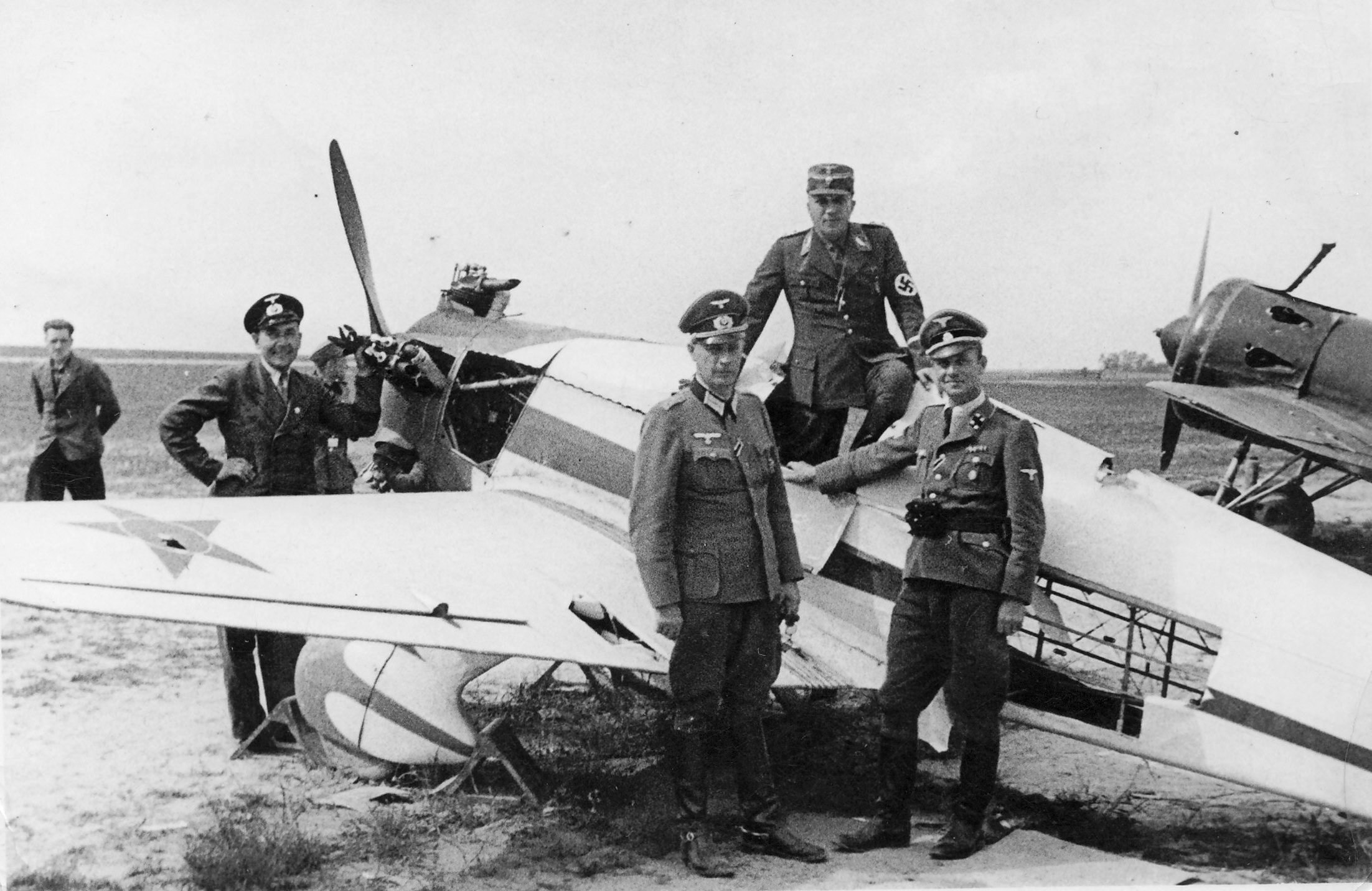
Operation Barabarossa – Attack on soviet union
On June 22, 1941, with Operation Barbarossa, the German invasion of the Soviet Union began.
The letters of Roland and Hilde clearly show the initial euphoria and confidence in a quick victory.
Roland, who was stationed on the Eastern Front at that time, described the advance into Russia and repeatedly emphasized the size and richness of the country.
In his notes, he portrayed Russia as “a very rich land with the most incredible conditions among the population,” revealing the widespread mix of condescension and incomprehension toward Soviet society.
The letters illustrate how strongly Nazi propaganda shaped soldiers’ perceptions.
Roland wrote of the need to “awaken” the population and to free it from the “terror regime.”
Such phrases echoed almost word for word the arguments of Nazi leaders, who justified the war in the East as a “war of liberation.”
Hilde, meanwhile, expressed her distress over the brutality of the fighting, writing about “the terrible things happening in the East,” while also fearing a possible Russian invasion of Germany.
The events of these months marked a new dimension of the war.
The attack on the Soviet Union led not only to the largest military operation in history but also to an escalation of violence.
The ideologically driven warfare, which Roland’s letters unconsciously mirrored, soon became the foundation of the war of annihilation in the East.
While his early letters still expressed confidence, later passages increasingly reflected exhaustion and doubt, as when Roland wrote that there was “hardly a place left on Earth untouched by this war.”
The letters of Roland and Hilde thus serve as a testimony to propaganda, everyday life, and the gradual disillusionment that set in during 1941.
They illustrate how closely personal perception and political indoctrination were intertwined and how the war shaped the mindset of an entire generation.